
Finger MRI vs X-ray vs Ultrasound
Compare finger X-ray, MRI, and ultrasound for fractures, tendon injuries, pulley tears, ligament injuries, and arthritis.
Key Takeaways
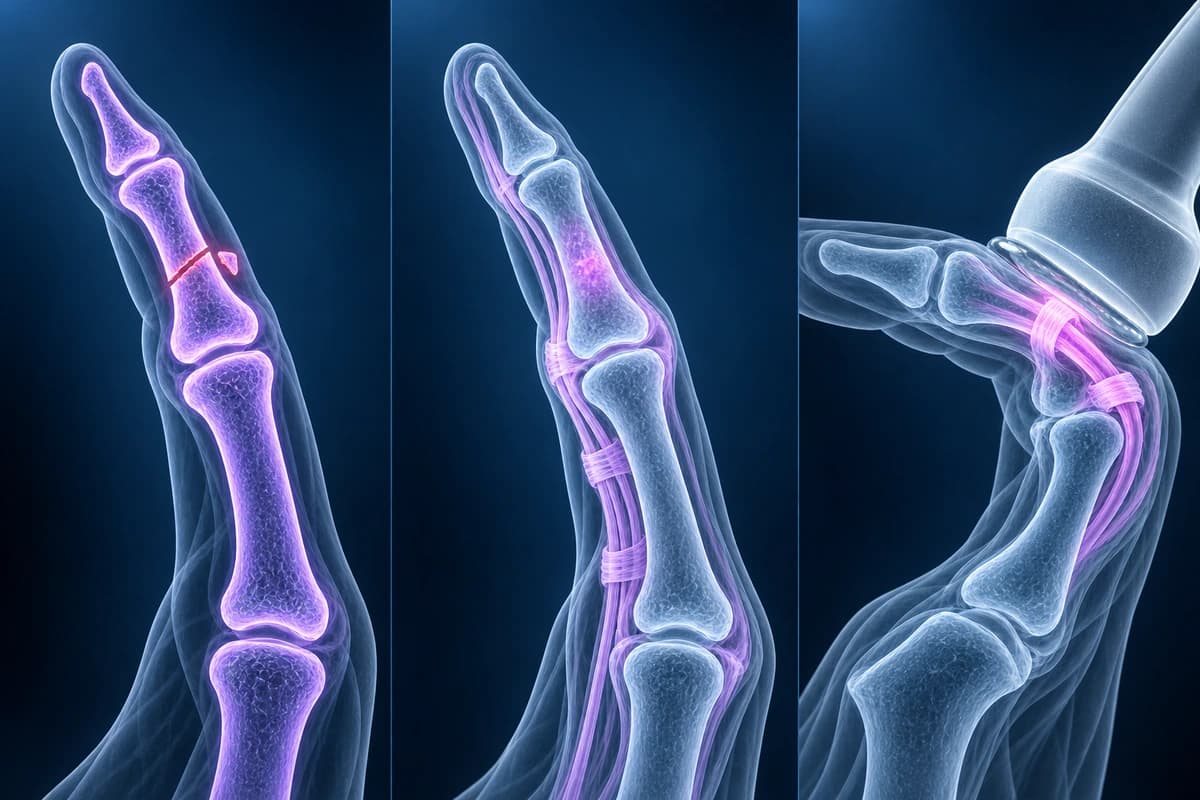
- X-ray is usually first for acute hand and finger trauma
- MRI is useful when bone marrow or deep soft-tissue detail matters
- Ultrasound is strongest for dynamic tendon, pulley, and ligament questions
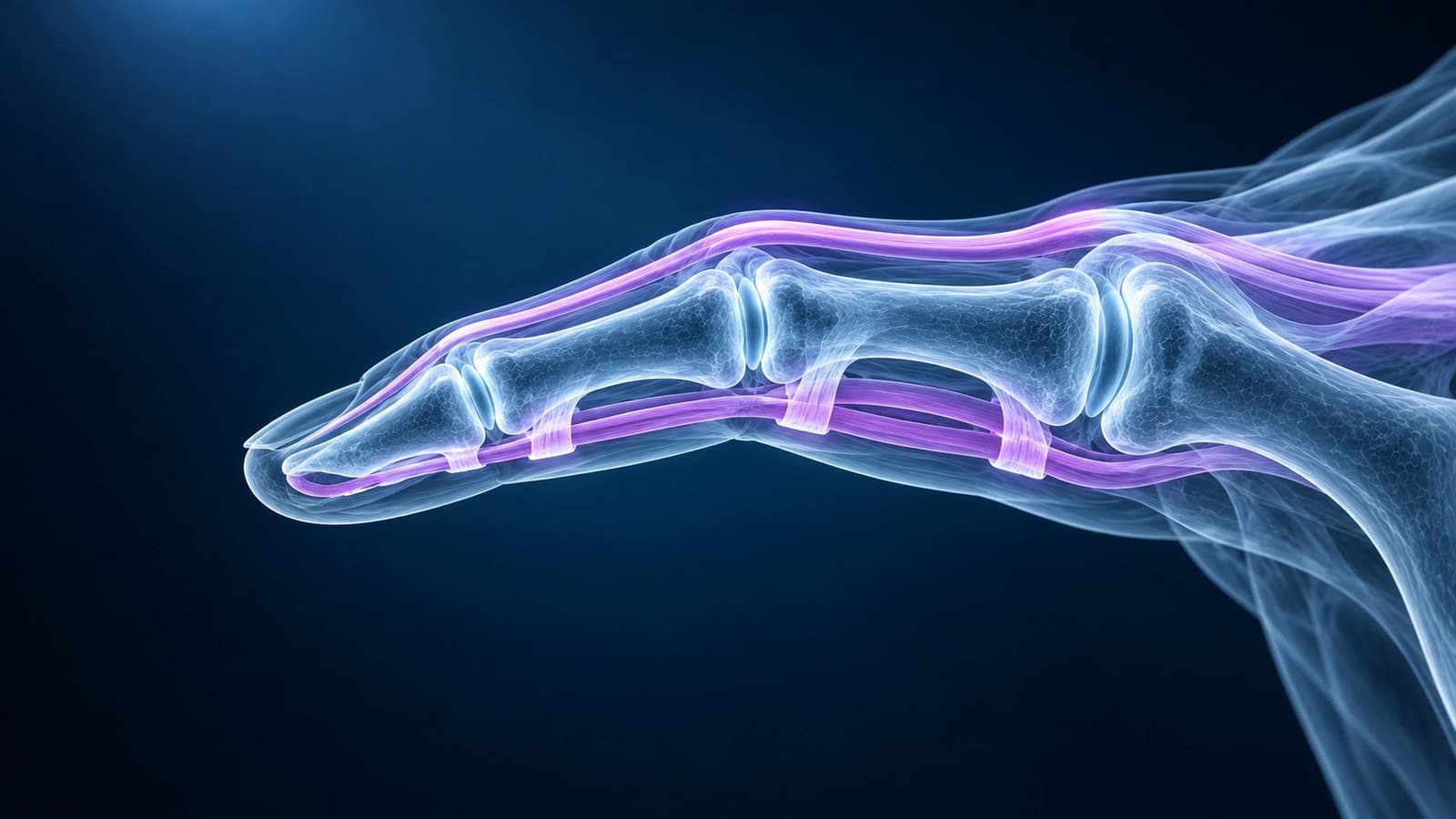
Finger imaging works best when the test matches the question. X-ray is the starting point for most acute injuries because it shows fractures, dislocations, arthritis, and alignment. MRI and ultrasound add soft-tissue detail when a tendon, ligament, pulley, or occult fracture is suspected.
What X-ray Shows Best
- Phalanx and metacarpal fractures
- Dislocations, subluxations, and post-reduction alignment
- Small avulsion fragments near tendon or ligament attachments
- Hand arthritis pattern, osteophytes, erosions, and joint narrowing
When MRI or Ultrasound Adds Value
- MRI can show occult fracture, bone marrow edema, synovitis, and tendon injury
- Ultrasound can dynamically assess flexor tendons, pulleys, and thumb UCL tears
- MRI gives a broader field when multiple structures may be injured
- Ultrasound quality depends heavily on operator experience
Frequently Asked Questions
Do I need MRI if my finger X-ray is normal?
Not always. Many sprains improve with clinical care. MRI or ultrasound is more likely when pain persists, tendon function is abnormal, instability is suspected, or the clinician needs to answer a specific question.
Do I need a 3T MRI for a finger injury?
Usually not as the first step. X-ray answers most fracture, avulsion, dislocation, and alignment questions. A targeted 3T MRI is more worth asking about when pain persists after normal X-rays or when the clinician needs fine soft-tissue detail.
Which test is best for a climber pulley injury?
Dynamic ultrasound and MRI can both be useful. Ultrasound can show bowstringing during movement; MRI can show edema, pulley disruption, and associated injuries.
Sources
- Expert Panel on Musculoskeletal Imaging; Torabi M, Lenchik L, et al. ACR Appropriateness Criteria Acute Hand and Wrist Trauma. J Am Coll Radiol. 2019;16(5S):S7-S17.
- Giese J, Cerniglia C. Soft tissue injuries of the finger and thumb. Semin Ultrasound CT MR. 2018;39(4):397-410.
- McCarthy CL. Ultrasound of normal and injured ligaments and retinacula of the hand. Semin Musculoskelet Radiol. 2020;24(2):83-100.
- Hauger O, Chung CB, Lektrakul N, et al. Pulley system in the fingers: normal anatomy and simulated lesions in cadavers at MR imaging, CT, and US with and without contrast material distention of the tendon sheath. Radiology. 2000;217(1):201-212.
Related Articles
A plain-language guide to your hand or finger X-ray: how bones and joints should line up, and what fractures, avulsion fragments and arthritis look like.
Learn when 3T hand MRI can help for thumb UCL tears, pulley injuries, occult fractures, and arthritis, and when X-ray, ultrasound, or 1.5T MRI is enough.
Skier's or gamekeeper's thumb? Learn how MRI and ultrasound show a thumb UCL tear, what a Stener lesion is and why it can change treatment.
Related Conditions
Understand your imaging before your next appointment
MRI, X-ray or CT from a CD, folder or ZIP. A PDF report or photos of the films work too.
Free to open and preview, no account needed. An optional AI report from $10 explains your images in plain language, with questions for your doctor.
Your raw files stay on this device. Only rendered images and minimal context are sent when you request an AI report.
Medical Disclaimer: This page is for informational and educational purposes only. It does not constitute medical advice, diagnosis, or treatment. AI-generated analysis may contain errors. Always consult a qualified healthcare professional for medical decisions. Full Disclaimer